
Prescription (Rx) Hearing Aids vs Over The Counter (OTC) Hearing Aids
Over-the-Counter (OTC) hearing aids were formally established in 2022 by the U.S. Food and Drug Administration (FDA) to improve access and affordability for adults with a perceived mild to moderate hearing loss. These devices are intended for adults who may not require hearing assistance in every listening situation and who are comfortable selecting and adjusting a device on their own.
OTC hearing aids may help enhance speech clarity and improve everyday communication for people who generally hear well but experience difficulty in certain environments, such as conversations in noise or group settings.
Devices traditionally purchased through an audiologist or hearing professional are now classified by the FDA as prescription hearing aids. Compared with prescription devices, OTC hearing aids generally offer more limited loudness output, fewer advanced features, and less customization. While both OTC and prescription hearing aids may share common features—such as rechargeable batteries, smartphone connectivity, or basic noise reduction—the level of personalization, professional fitting, and signal processing sophistication can differ significantly.
The OTC hearing aid market continues to evolve rapidly, with new models, features, and price points introduced frequently. As a result, the variety, quality, and functionality of OTC hearing aids can change quickly as manufacturers refine their offerings.
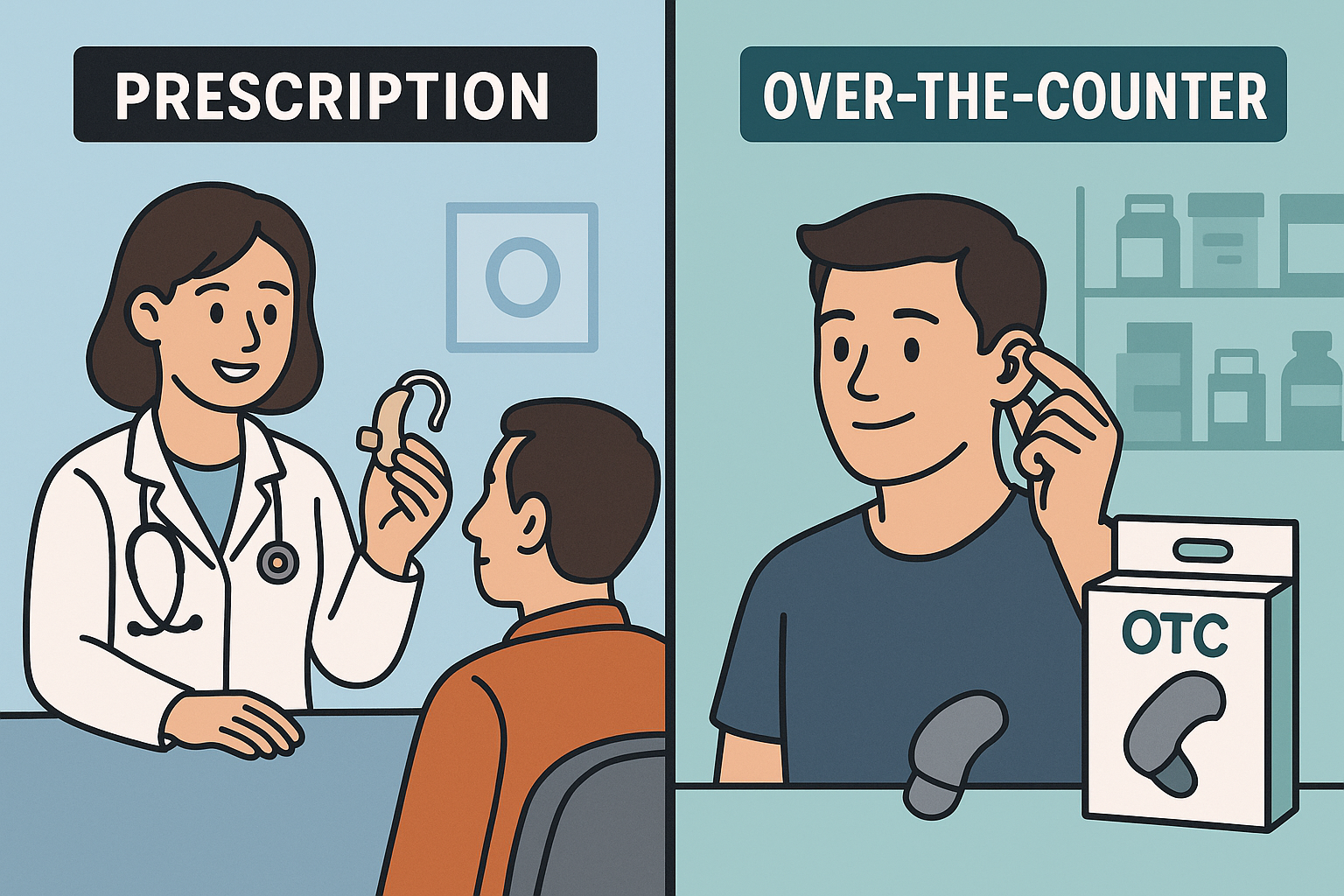
OTC vs Prescription Hearing Aids: What’s the Difference?
| Fit and programmed by an audiologist or hearing specialist. | Self-fit by the user; no professional fitting required. |
| Suitable for mild to profound hearing loss. | Intended for mild to moderate hearing loss only. |
| Requires a hearing test/consultation. | Buy directly online, in stores, or pharmacies. |
| Higher cost, includes personalized adjustments & follow-ups. | Lower cost; limited or no professional support. |
| Broad styles + advanced features (Bluetooth, noise reduction, rechargeability, custom molds). | Generally simpler; some models include Bluetooth/rechargeable batteries. |
| Sometimes covered by insurance/benefits. | Usually not covered by insurance. |
If you’re unsure which option may be right for you, explore our Hearing Test Resources or ask questions in the HArC I Hear Community Forum.